


Timber pavilion in a coastal setting: CLT and glulam structure at the Zandvoort Tennis Club
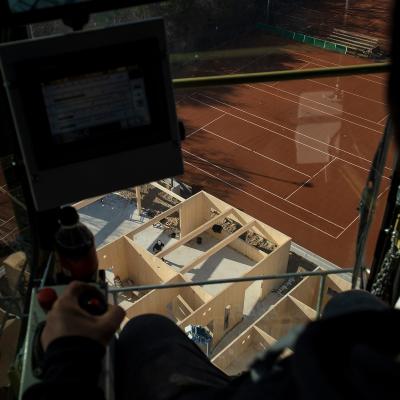
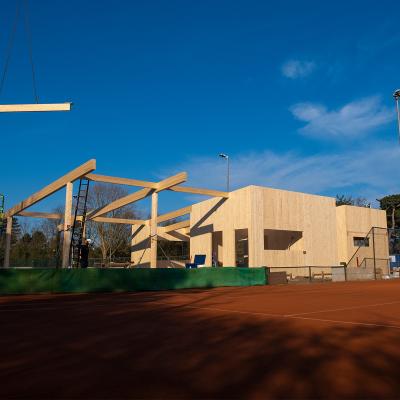
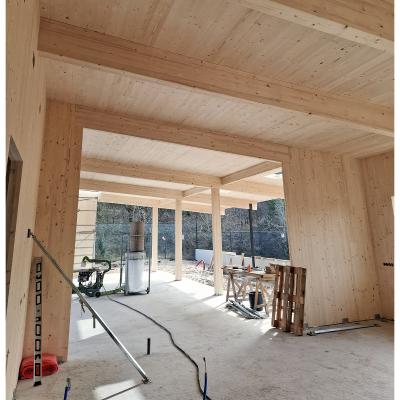
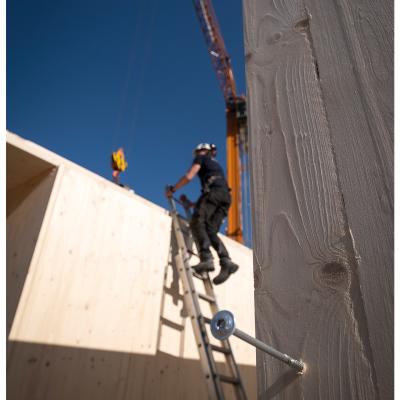
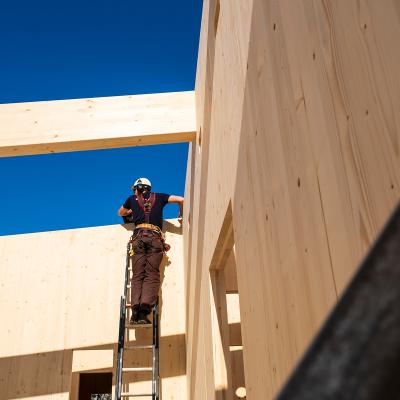
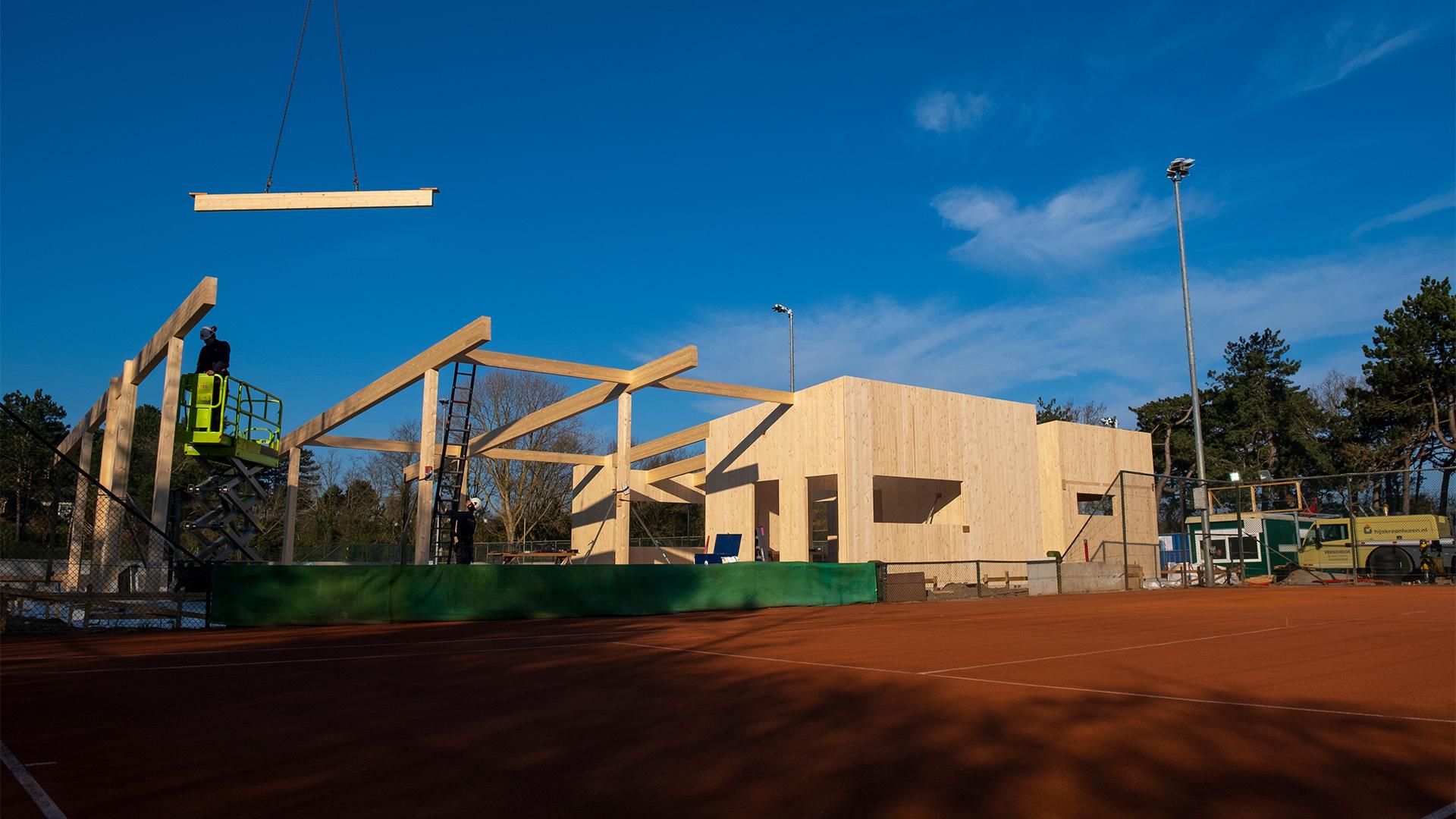
Amid the dunes of the Dutch Zuid-Kennemerland National Park, within the protected Natura 2000 area, the construction of the new pavilion for the Zandvoort Tennis Club raised a very specific question: is it possible to build a timber structure that guarantees durability, structural performance and architectural quality in an environment particularly exposed to moisture and chlorides?
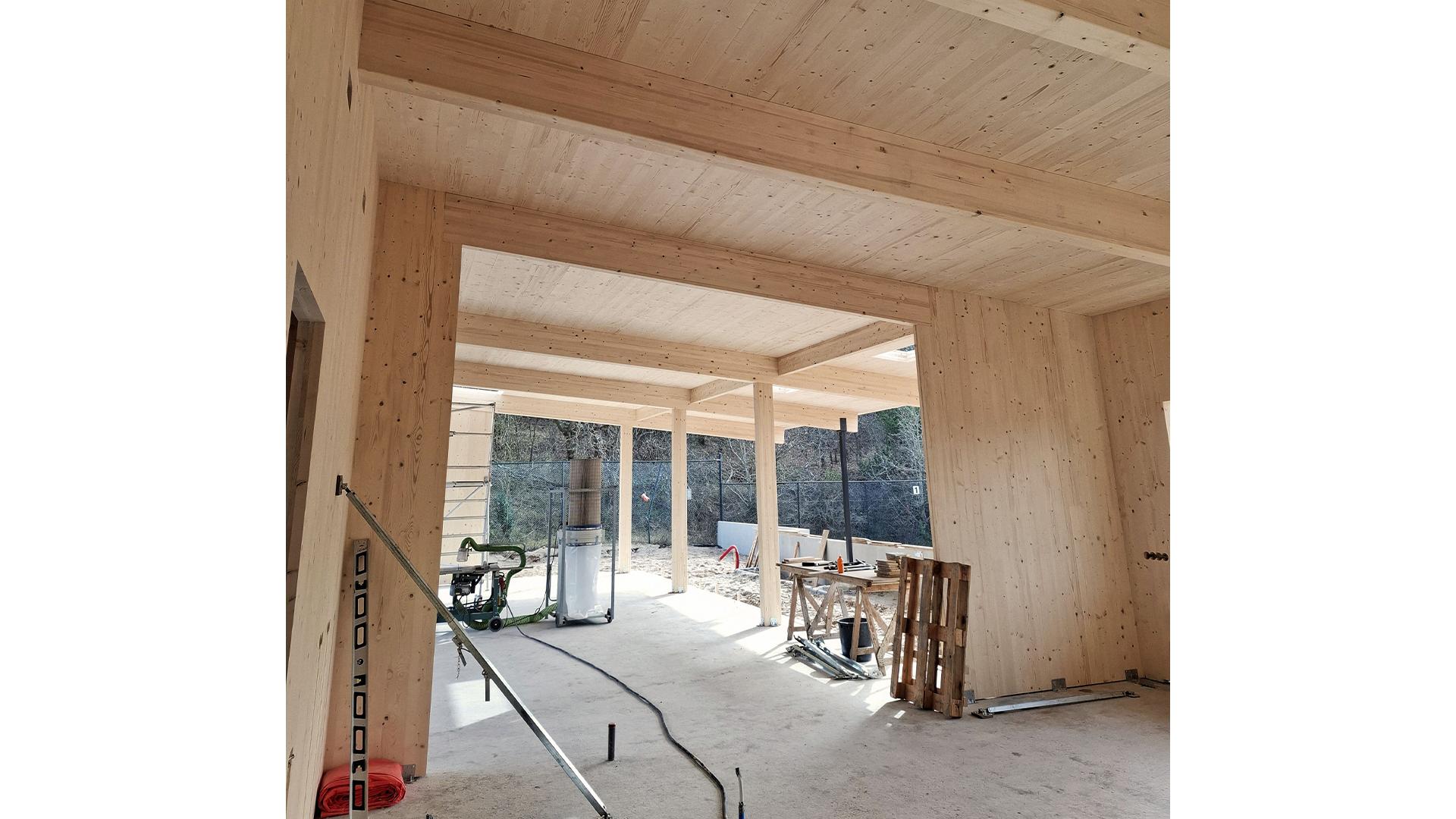
To meet all these requirements, a clear decision was made: to use CLT panels and glued laminated timber (glulam) beams as the primary structural system. A solution combining sustainability, rapid construction and high-quality spaces, while also demanding strict control over the type of structural connections and protection of the building envelope.
CLT and glulam: a winning combination
The combined use of CLT and glulam allows different requirements to be addressed within the same building. While CLT walls provide stability and stiffness, glulam enables longer spans and the creation of open spaces typical of sports facilities. This construction system therefore offers clear advantages in terms of sustainability and speed of execution, but also requires connections that can reliably transfer loads and maintain performance over time.
Anchoring timber pavilions: the role of tension systems
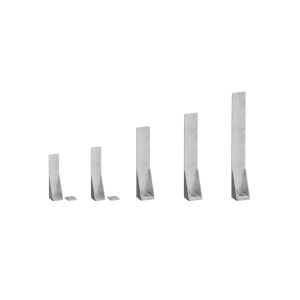
In CLT walls, one of the most critical aspects is their connection to the ground. Wind and other horizontal loads generate tensile forces that must be reliably managed. Systems such as the WHT hold-down angle bracket with the WHTW washer, are designed to meet this need. These are high-strength anchoring devices allowing the controlled transfer of tensile forces from the timber walls to the foundations. Their versatility makes them suitable for a range of design configurations, ensuring structural continuity and safety even in demanding environmental conditions.
Rapid installation and on-site adaptability
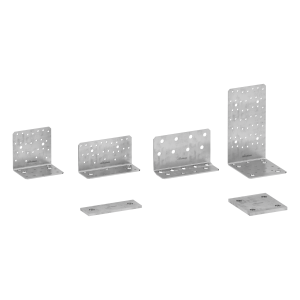
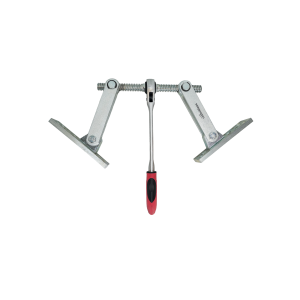
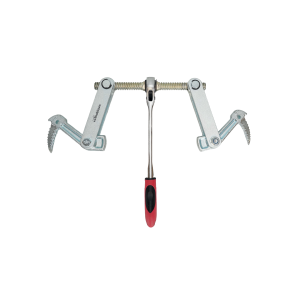
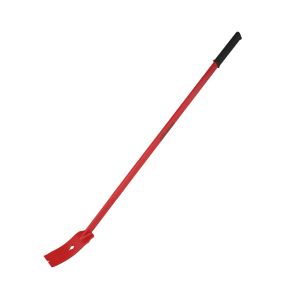
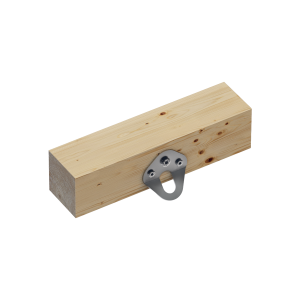
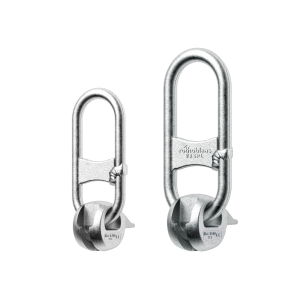
The construction of a timber pavilion is often associated with shorter assembly times. However, this advantage depends on connection systems that facilitate rapid installation. In this respect, NINO proves to be a valuable ally. This universal angle bracket adapts to a range of on-site situations and helps to simplify assembly operations. The ability to work with controlled tolerances and variable configurations also reduces both installation time and operational complexity. This is complemented by the use of dedicated tools including the GIRAFFE CLT assembly support, the GEKO panel puller and SKORPIO beam puller, as well as ANT, KITE and WASP, all of which enable precise and repeatable work. These factors also affect the quality of the final result: a sound design on paper must also work efficiently on site.
Architectural quality and high mechanical performance through structural connections
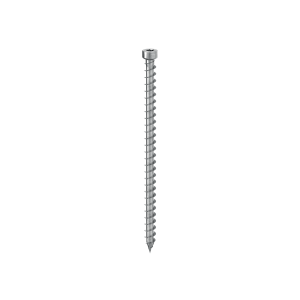
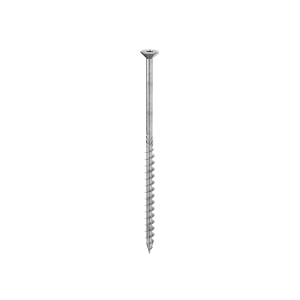
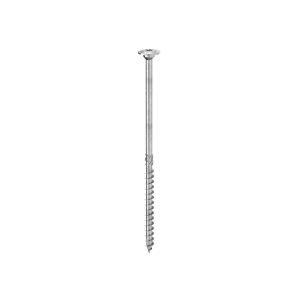
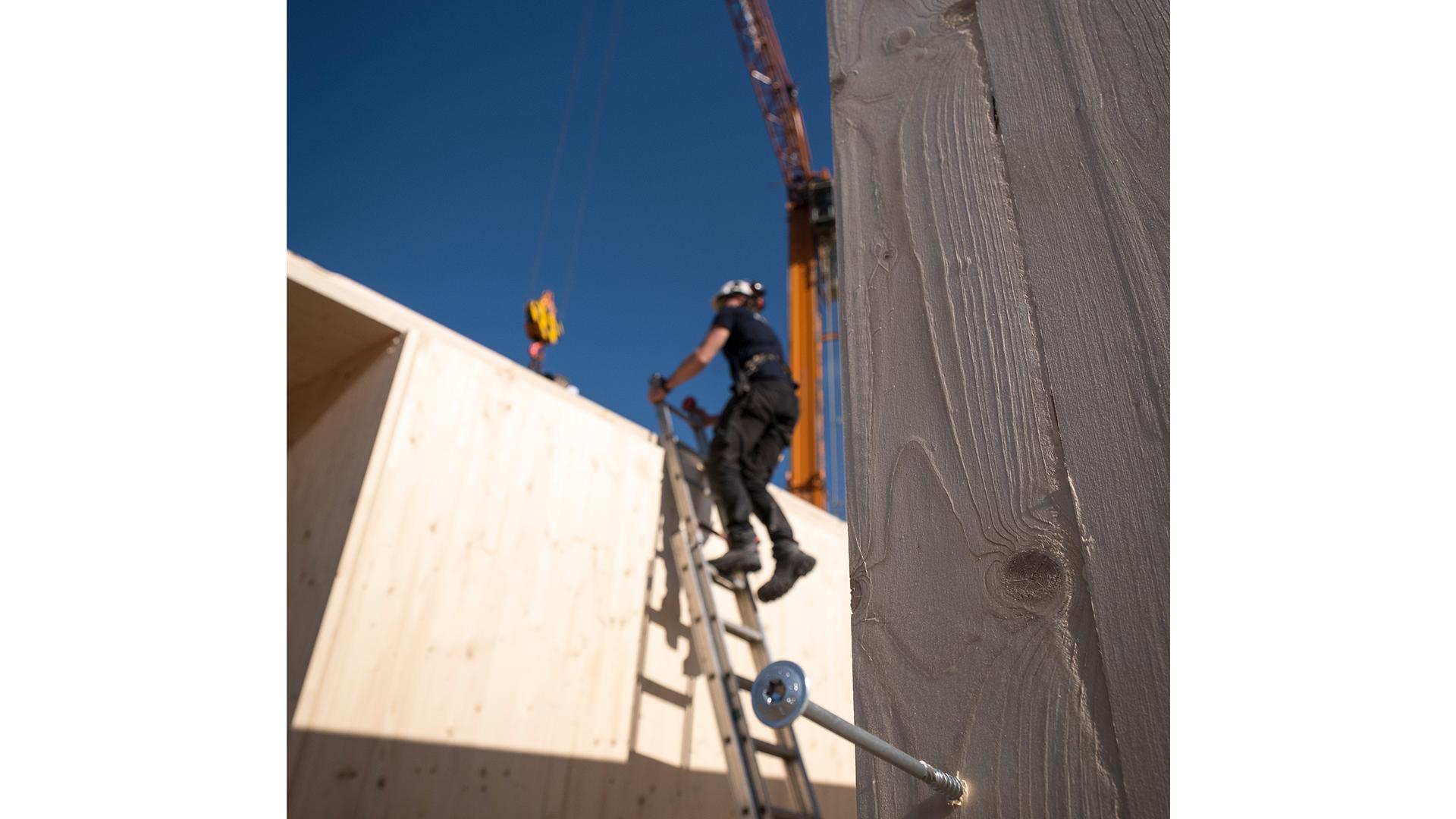
Load transfer between timber elements relies on fixing systems capable of ensuring strength, precision and durability. In the case of the Zandvoort clubhouse, VGZ full threaded screws with cylindrical head were selected as they enable efficient structural connections, ensuring continuous load transfer and contributing to overall stability and stiffness. Similarly, structural timber screws such as HBS and TBS provide high mechanical performance, both in tension and shear, adapting to a range of connection configurations.
Another important aspect, particularly in buildings with exposed timber, is the ability to maintain a high level of architectural quality. The use of tools such as the 35 mm BORMAX bit, paired with timber plugs, enables concealed connections, combining structural performance with a refined appearance.
A tailored solution
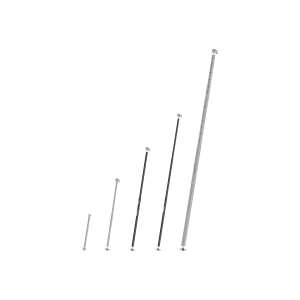
Alongside the screws, the project incorporates a range of metal connection systems, including SKR, LBA and LBV, designed to meet specific load and geometric requirements. These elements work in conjunction with fixing systems, including the INA threaded rod used in combination with chemical anchors such as HYB-FIX and VIN-FIX, which ensure effective anchorage in a variety of substrates and contribute to the overall stability of the structure. This variety of solutions is not a source of complexity, but a necessity: each structural node requires a system suited to the specific project conditions.
Airtightness and durability in a coastal setting
In a coastal environment, managing air and water is essential to ensuring the building’s durability. To extend its service life as much as possible, continuity of the building envelope is key. How can this be achieved? In the case of the Zandvoort clubhouse, SPEEDY BAND was used – a single-sided adhesive tape designed to create airtight and watertight joints. Its speed of application is an added advantage, particularly in variable environmental conditions where limiting exposure time is critical.
In short, a building’s performance depends not only on its structure, but also on the envelope's ability to protect materials over time.
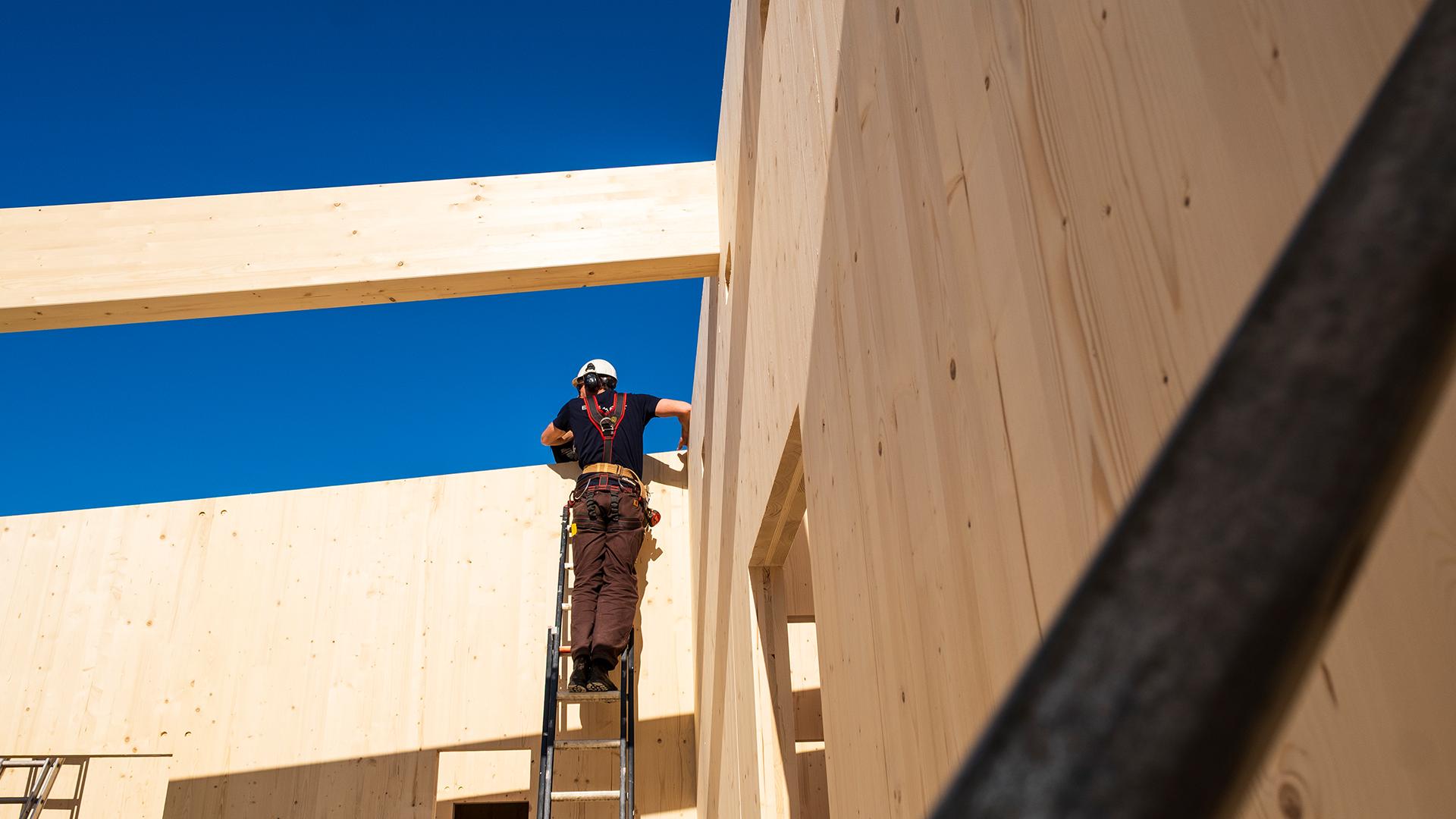
CLT and glulam for a greener future
The Zandvoort Tennis Club pavilion shows how timber construction can offer a practical response to sustainability requirements, even in the most sensitive environmental conditions. The use of renewable materials, combined with efficient connection systems and well-designed details, reduces environmental impact without compromising performance.
To learn more about corrosion and the durability of timber screws, see: Timber screws: a guide to risk factors.
All rights reserved